Hiring a mover in Florida involves legal rights, practical steps, and specific protections designed to keep your money and belongings safe. This guide explains what recent laws require, how estimates and deposits work, how to verify carriers, what valuation coverage protects, common scams to avoid, and how to resolve disputes—so you can plan and execute a move with confidence. Many Florida consumers face surprise charges, withheld goods, or unclear valuation terms; understanding binding versus non-binding estimates, deposit mechanics, and FDACS registration helps prevent those problems. The article walks through Senate Bill 304 and Chapter 507 Florida Statutes in plain language, examines estimate types and deposit best practices, outlines how to confirm a licensed, insured mover, and explains valuation and claims procedures. You will find checklists, comparison tables, verification steps, and practical red flags to scan for when hiring amoving companyor broker. Read on to learn actionable steps that protect your rights during pre-move planning, moving day, and post-move dispute resolution.
Navigating Florida's Moving Laws: Protecting Consumers in 2024What Are the Latest Florida Moving Laws and Consumer Protections in 2024?
Florida updated moving regulations in recent legislation to strengthen consumer protections for household moves, focusing on registration, insurance, and broker accountability. Senate Bill 304 and revisions in Chapter 507 Florida Statutes expanded required disclosures, tightened recordkeeping, and clarified valuation and estimate practices to reduce fraud and bait-and-switch behaviors. These changes place clearer duties on carriers and brokers to register, carry minimum insurance, and keep written evidence of estimates and contracts, which directly improves a consumer’s ability to dispute overcharges. The regulatory enforcement role is primarily with the Florida Department of Agriculture and Consumer Services (FDACS), which can investigate complaints, impose administrative penalties, and refer serious conduct for criminal prosecution when goods are unlawfully withheld. Understanding these statutory changes helps you demand the right documents and pursue remedies if a mover violates the law; to stay organized throughout the process, refer to our Moving Checklistfor guidance.
What Does Senate Bill 304 and Chapter 507 Florida Statutes Cover?
Senate Bill 304 and Chapter 507 emphasize registration of household goods carriers and set stricter rules for moving brokers, estimates, and liability disclosures. The law requires movers and certain brokers to maintain registration with FDACS and to make clear disclosures about estimate types, valuation options, and fees, reducing ambiguity in contracts. It also establishes insurance minimums and requires recordkeeping of written estimates and bills of lading to support enforcement and complaints. These statutory provisions translate into concrete consumer rights: the ability to request written, in-person estimates, to compare valuation coverage, and to hold carriers accountable for failing to return goods or follow agreed terms.
How Do These Laws Protect Florida Moving Consumers?
The laws give consumers practical protections by mandating documentation and clearer insurance and registration requirements, which improve traceability and legal recourse. By requiring written estimates and disclosure of valuation options, the statutes make it easier to spot bait-and-switch pricing and to compute damages if items are lost or damaged. FDACS’s enhanced enforcement powers mean administrative sanctions, license suspension, or referral for criminal charges in severe cases like theft or refusal to release goods. These protections reduce risk for consumers and encourage movers to follow transparent practices; understanding enforcement leads naturally to the penalties that apply for violations.
What Are the Penalties for Violating Florida Moving Regulations?
Violations under Chapter 507 and SB 304 can trigger administrative fines, license suspension, and in serious cases criminal charges when a mover unlawfully withholds goods or commits fraud. FDACS may levy civil penalties and require remedial measures, while the Attorney General’s office can pursue broader consumer-protection actions where patterns of misconduct exist. In egregious situations—such as refusal to release possessions or intentional deception—criminal penalties may apply and victims can seek restitution through civil suits or small claims court. Knowing these enforcement tools helps consumers document violations and escalate appropriately to FDACS or prosecuting authorities when necessary.
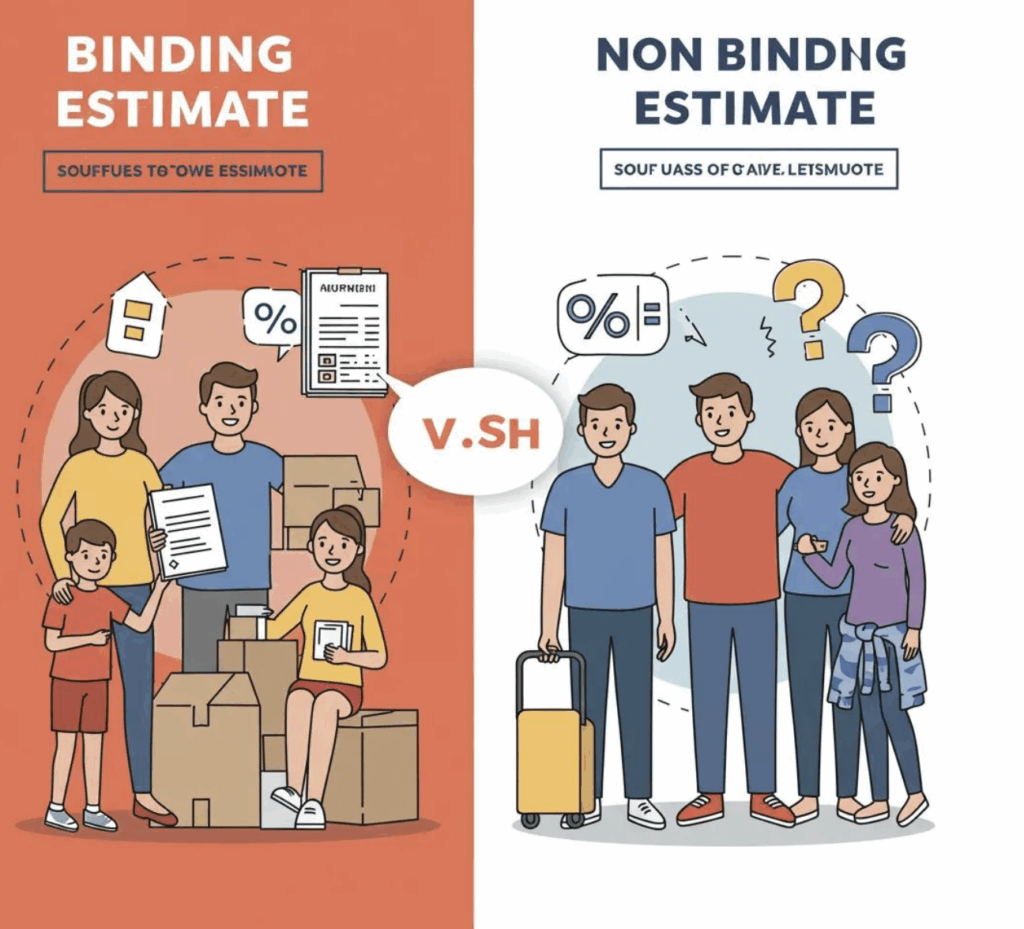
How Do Moving Estimates Work in Florida? Binding vs. Non-Binding Explained
Moving estimates set expectations for price and liability; in Florida, the distinction between binding and non-binding estimates affects how much you can be charged and what protections you receive. A binding estimate guarantees the final price except for agreed extras, while a non-binding estimate provides a good-faith projection that can change based on actual weight, services, or unforeseen conditions. Getting a written, in-person estimate reduces the risk of surprise charges because the estimator can account for items, access constraints, and packing needs; documentation also supports disputes. To better prepare for packing, refer to our Moving Boxes Room Guidefor a breakdown of box sizes and room-specific packing tips.
| Estimate Type | Legal Definition (Florida) | Typical Cost Implication | Consumer Action |
|---|
| Binding estimate | Locks the total price except for documented extras | Predictable final cost; fewer surcharges | Request written in-person binding estimate and list extras |
| Non-binding estimate | Approximate cost based on initial inventory; final may change | Final bill can be higher based on weight/time | Get detailed line items and ask for weight-based explanations |
| Hybrid/Not-to-exceed | Guarantees not to exceed a ceiling but may drop | Final charge ≤ ceiling; possible refunds if lower | Confirm ceiling and how adjustments are handled in writing |
This table clarifies how each estimate type affects price certainty and what you should demand from the mover. Next, the following subsection defines binding estimates and why they matter.
What Is a Binding Moving Estimate and Why Is It Important?
A binding moving estimate promises a fixed total price for the move, requiring the mover to absorb cost overruns except for specific, documented extras that both parties agree to. This estimate provides price certainty and reduces disputes because the final charge should match the written figure unless you authorized additional services. In practice, consumers should insist on a written, in-person binding estimate that itemizes included services and lists potential extras to avoid vague charges. Receiving a binding estimate also strengthens your position when filing complaints, because you can point to a clear contractual promise.
How Does a Non-Binding Estimate Affect Your Move?
A non-binding estimate offers flexibility for the mover and may reflect an initial assessment that changes once items are weighed or additional labor is needed, which can lead to higher final bills. Although non-binding estimates can be useful for budgeting, they require careful documentation of included items, fees, and valuation to limit disputes after delivery. Ask movers to provide detailed line items and a clear explanation of surcharges, and insist on written records of any verbal agreements to reduce the risk of unexpected charges. Understanding these limits helps you compare quotes and decide whether the certainty of a binding estimate is worth any potential premium.
Why Should You Always Get a Written, In-Person Estimate?
An in-person, written estimate improves accuracy because the estimator inspects furniture, access paths, and special handling needs that a phone or video estimate might miss, reducing the chance of underquoting. Written documentation creates evidence for complaints or claims and clarifies which services and valuation options were discussed, making it harder for a mover to claim different terms later. Ask the estimator to note stairs, elevators, disassembly needs, and fragile items, and request copies of the estimate and the bill of lading before the move begins. With that documentation in hand, you can compare offers meaningfully and protect yourself from common billing disputes.
How to Compare and Understand Different Estimate Types?
Comparing estimates requires checking line-item detail, valuation coverage, fuel or access surcharges, and refund/adjustment policies; ask for a sample bill of lading and written estimate terms. Use the EAV-style comparison above to evaluate price certainty, what triggers extras, and whether the mover provides written commitments you can enforce. When soliciting multiple quotes, ensure each covers the same inventory and access conditions so comparisons are apples-to-apples, and list specific questions to clarify inclusions. A careful comparison makes the best choice clear and reduces the likelihood of surprise charges on moving day.
After reviewing estimate types, consider a transparent vendor process that helps you request binding estimates confidently. For consumers who want a straightforward option, a mover that emphasizes written, in-person binding estimates and clear line-item quotes can reduce uncertainty and serve as a reliable choice for planning and dispute avoidance.
What Are the Rules and Best Practices for Moving Company Deposits in Florida?
Deposits are common but regulated practice in moving services; understanding when they are allowed and what constitutes reasonable deposits helps you avoid scams and secure refunds if plans change. Florida law does not universally mandate deposits, but local ordinances and industry standards often guide acceptable ranges and refund conditions, while written agreements should always specify deposit terms. Consumers should demand a deposit receipt and written refund policy, watch for high cash-only demands or pressure tactics, and verify local caps when applicable. The table below outlines jurisdictional differences, typical allowed ranges, and consumer tips to help you evaluate deposit requests and protect your funds.
| Jurisdiction / Local Ordinance | Allowed Deposit Range | Refund Conditions | Consumer Tip |
|---|
| State-level (Florida) | No uniform cap statewide; industry norms apply | Deposit refundable if mover breaches contract or cancels per terms | Always get deposit policy in writing and retain receipt |
| Example local ordinance (sample) | Often 10–25% of estimated cost in some counties | Refund upon service cancellation or breach, sometimes with time limits | Verify county rules and ask for written clarification |
| Common industry standard | Small booking fee or percentage to reserve date | Refundable if mover cancels or fails to provide service | Avoid large cash-only deposits and demand written refund terms |
Is a Deposit Required When Hiring a Florida Mover?
State law does not mandate deposits for all moves, but many movers request a deposit to reserve dates or cover initial costs; what matters legally is that deposit terms are disclosed and documented. A reasonable deposit is typically a modest percentage of the total estimate or a flat booking fee, and it should be refundable under clearly defined conditions such as mover cancellation. Insist on a written receipt that specifies the amount, purpose, refund conditions, and timeline; without that documentation your options for recovery become limited. Documenting the deposit in writing gives you leverage if the mover fails to perform or withholds refunds.
What Is the Legal Limit on Deposits in Florida and Local Ordinances?
Florida’s statutes do not prescribe a single statewide deposit cap, but certain counties or municipalities may set local rules limiting deposits or requiring specific disclosures, so verify local ordinances when moving between jurisdictions. Industry examples show permitted deposits often range from small booking fees to 10–25% of the estimate in some local codes, and enforcement typically requires written policies and receipts. Ask movers whether local deposit limits apply to your area and request written confirmation of any cap or statutory requirement. Knowing local rules helps you identify excessive deposit requests and avoid companies that ignore ordinance protections.
When Is Paying a Deposit a Red Flag?
Large upfront cash-only deposits, pressure to pay immediately without written terms, or refusal to provide a receipt are major red flags indicating potential fraud. If a mover resists documenting deposit terms, avoids FDACS registration questions, or insists on non-traceable payment methods, treat the request with extreme caution. Always demand a written deposit agreement detailing refund conditions, and consider alternatives like credit card holds that provide consumer protections. Recognizing these warning signs before paying protects you from common schemes where goods are later withheld or demands for additional money are made.
How Can You Get a Deposit Refund If Needed?
To recover a deposit, start by reviewing the written agreement and requesting a written refund from the mover; keep all receipts and communications as evidence. If the mover refuses or ignores the request, escalate by filing a complaint with FDACS and consider contacting the Florida Attorney General’s consumer protection division or the Better Business Bureau for mediation assistance. Maintain organized documentation—estimate, bill of lading, deposit receipt, and correspondence—to support refund claims or small-claims court actions. These steps create a clear record that enforcement agencies can use to obtain refunds or sanctions against noncompliant movers.
At the end of this section: for consumers who prefer transparent deposit policies, some moving and storage providers publish standard deposit percentages and refundable terms on quote documents and will include deposit receipts upon request to align with FDACS guidance and consumer expectations.
How Can You Verify a Licensed and Insured Florida Mover?
Verifying a mover’s license and insurance is essential to ensure a carrier is registered with FDACS, carries required cargo and liability insurance, and operates with accountability. Key steps include checking FDACS registration status, requesting certificates of insurance, confirming valuation options, and confirming whether the entity is a broker or a carrier; these checks reduce risk and improve remedies if loss occurs. Below is a compact numbered checklist to use when verifying credentials before hiring a mover.
Use this verification checklist when vetting movers:
- Check registration: Confirm the mover’s FDACS registration number and status through official records.
- Request insurance documents: Ask for certificates showing cargo and general liability coverage and confirm effective dates.
- Confirm valuation: Ask which valuation option applies and request it in writing on the estimate.
- Ask about brokers: Clarify whether the company is a broker or a carrier and get the carrier’s registration if brokered.
These steps create a defensible paper trail and reduce the likelihood of engaging an unregistered or underinsured operator. The next subsection explains the FDACS registration check in more detail.
How to Check FDACS Registration and Licensing for Movers?
To check registration, use FDACS’s mover registration lookup to verify the business name, registration number, and status, and to view any administrative actions or complaints that may appear in the record. Note the registration number and ask the mover to confirm it in writing on your estimate and contract so you can reference it in any future complaint. Pay attention to registration expiration and disciplinary history, and document any discrepancies between the mover’s claims and FDACS records. Confirming registration provides a crucial verification step that precedes insurance checks and valuation discussions.
What Insurance Coverage Should a Florida Mover Have?
A reputable Florida mover should carry cargo insurance, general liability, and—if applicable—workers’ compensation; valuation coverage options (released value vs full-value) should be clearly disclosed and explained in writing. Cargo insurance covers items in transit while general liability covers property damage and accidents; valuation terms determine who pays for contents if loss or damage occurs. Request certificates of insurance and verify coverage amounts and effective dates; ask which insurer underwrites the policy and confirm that the coverage is active for your moving dates. Understanding insurance types and limits helps you choose adequate protection for high-value items.
What Is the Difference Between a Moving Broker and a Moving Company in Florida?
A moving broker arranges and coordinates moves but typically does not perform the physical transport, whereas a moving company (carrier) actually transports goods and assumes direct responsibility under its registration. Under recent law, brokers face tighter restrictions and greater disclosure obligations to ensure consumers know who will carry goods and who is contractually responsible in case of loss. Prefer a registered carrier for accountability, and if a broker is involved ask for the carrier’s registration and contract terms in writing. Choosing a carrier directly often narrows parties responsible for claims and simplifies enforcement under FDACS rules.
At the end of this verification section: if you need assistance confirming FDACS registration or want a pre-move compliance check, many reputable moving providers offer verification support and can furnish registration details and insurance certificates upon request to make hiring safer and more transparent.
How Does Valuation Coverage Protect Your Belongings During a Florida Move?
Valuation coverage determines how a mover compensates you for lost or damaged items and is a critical contract term to review before the move begins. Standard released value often limits carrier liability to a cents-per-pound amount per article, which may yield low payouts for high-value items, while full-value protection and declared valuation increase carrier liability in exchange for higher fees. Comparing valuation options helps you decide which coverage matches your risk tolerance and the inventory’s value; the table below compares valuation choices, typical costs, and when to choose each.
| Valuation Option | Coverage Description | Typical Cost | When to Choose |
|---|
| Released value (standard) | Carrier liability limited to cents-per-pound per article | Lowest cost; minimal payout for high-value items | For low-value household goods or when insurance supplements are used |
| Declared value | You declare a value for higher liability; fee increases proportionally | Moderate cost; liability rises with declared amount | When transporting items with moderate replacement cost |
| Full-value protection | Carrier pays repair, replacement, or cash settlement to make you whole | Highest cost; full replacement or repair | For high-value inventories or when full coverage is essential |
What Is Standard Liability Coverage for Movers in Florida?
Standard liability—often called released value—limits a mover’s payout to a cents-per-pound amount per article, which can result in modest recoveries for damaged high-value items. This baseline protection is inexpensive because it shifts much of the replacement risk to the consumer, making it unsuitable for expensive belongings like fine art or jewelry. If you keep only released value, consider buying supplemental insurance for high-value items and keep receipts to substantiate claims. Knowing how released value calculates payouts enables realistic expectations and informs the choice between cost and protection.
What Additional Valuation Coverage Options Are Available?
Additional options include declared valuation, where you assign value to your shipment and pay a fee that increases carrier liability, and full-value protection, where the mover agrees to repair or replace items or provide a cash settlement to make you whole. Each option increases cost but reduces out-of-pocket risk if loss or damage occurs; declared valuation scales linearly with declared value, while full-value protection typically includes deductibles and specific claim procedures. Choose declared or full-value for high-value inventories after weighing premiums against potential replacement costs and maintaining supporting documentation. Selecting the right option avoids unpleasant surprises after a loss.
How Do You File a Loss or Damage Claim with a Florida Mover?
File claims promptly by documenting damage at delivery, preserving packaging, photographing affected items, and completing the mover’s written claim form within stated deadlines while retaining copies of estimates and the bill of lading. Follow the mover’s claim procedures, submit required evidence such as receipts and photos, and maintain a timeline of communications; if the carrier denies or delays a valid claim, escalate to FDACS or the Attorney General with the complete documentation set. Timely, thorough documentation strengthens recovery chances and helps enforcement agencies investigate. Knowing these steps reduces delay and improves your claim outcome.
What Are Common Moving Scams and Red Flags to Avoid in Florida?
Fraudulent movers often use bait-and-switch pricing, demand large upfront cash payments, or withhold goods to extract more money; recognizing common tactics allows you to avoid them before they start. Typical schemes include lowball estimates that balloon mid-move, unsigned contracts, or movers who refuse written estimates and rely on verbal promises. Below is a bulleted checklist of red flags to scan for and short prevention actions you can take to stay safe when hiring movers.
- Extremely low estimate compared to others: Compare multiple written quotes and ask for explanations of low prices.
- Requests for large cash-only deposits: Insist on traceable payment methods and documented receipts.
- Refusal to provide a written contract or bill of lading: Do not allow the move to proceed without signed paperwork.
- No FDACS registration number or evasive answers: Verify registration and request written confirmation before paying.
What Are Typical Scam Tactics Used by Fraudulent Movers?
Fraudulent movers often lure customers with low initial quotes and then demand extra fees or hold goods hostage until additional payment is made, leveraging customers’ urgency. They may also provide vague contracts, avoid written estimates, or operate under unregistered business names to complicate enforcement. Always require written estimates, a clear bill of lading, and FDACS registration to limit susceptibility to these tactics and to create enforceable evidence. Recognizing these patterns helps you demand accountability and report misconduct quickly.
What Should You Expect During Your Florida Move? Step-by-Step Guide
A predictable timeline and clear expectations reduce stress and improve outcomes: preparation begins weeks before the move with inventory and estimates, continues through a documented move day process, and concludes with inspection and potential claims after delivery. Anticipate an estimator visit, sign a written contract or bill of lading, confirm valuation coverage, and plan payment method and timing; these pre-move actions set the stage for a smoother move. On moving day expect a crew walk-through, inventory check, and final paperwork signing before the truck departs; on delivery, inspect goods thoroughly and document any damage. The numbered checklist below outlines key steps from pre-move planning to post-move responsibilities.
Pre-move to post-move checklist:
- Before the move: Schedule a written, in-person estimate, verify FDACS registration, and choose valuation coverage.
- On moving day: Conduct a walkthrough, watch inventory tagging, sign the bill of lading, and keep a copy of all documents.
- After delivery: Inspect items immediately, note damages on delivery paperwork, and file claims within the mover’s stated deadlines.
Following these steps reduces disputes and improves claim outcomes; the next subsection details pre-move preparations.
What Happens Before the Move?
Before the move, create a detailed inventory, request in-person written estimates, decide on valuation coverage, and gather receipts for high-value items to support any future claims. Confirm access conditions, parking, elevator availability, and any narrow driveways so the estimator and movers can price labor and equipment accurately. Ask movers for proof of FDACS registration and insurance certificates and request written deposit and refund terms if a deposit is required. These preparations clarify expectations and reduce the likelihood of last-minute disputes.
What Should You Expect on Moving Day?
On moving day, expect the crew to arrive at the scheduled time, conduct a walkthrough to confirm inventory and services, and present the bill of lading and estimate for signature; do not sign blank documents. Watch movers load items, note any pre-existing damage, and keep a copy of paperwork and receipts; avoid making full payment until delivery inspection if possible and agreed in writing. If problems arise, document them immediately and contact the mover’s office for clarification. Clear communication and documentation on moving day pave the way for a smoother delivery and easier claims resolution.
What Are Your Post-Move Rights and Responsibilities?
After delivery you have the right to inspect all items and to note damages on delivery receipts; you must file claims according to the mover’s timelines and preserve proof such as photos, receipts, and the bill of lading. If the mover denies liability or delays payment, escalate to FDACS with full documentation and consider small claims or civil action if necessary; maintaining organized records expedites enforcement. Keep copies of all communications and follow up in writing to create an audit trail. Prompt inspection and timely claim filing maximize your chances of recovery.
What Are Your Options If You Have a Dispute with a Florida Mover? How to File Complaints
If direct negotiation with the mover fails, Florida provides escalation paths including FDACS complaints, Attorney General referrals, BBB mediation, and civil or small-claims suits to recover funds or seek remedies. Document the issue thoroughly—estimates, bill of lading, photos, receipts, and written communications—before filing complaints because agencies rely on this evidence to act. The numbered list below summarizes steps to escalate a dispute effectively and provides a logical sequence for pursuing administrative and legal remedies.
Steps to escalate a dispute:
- Contact the mover in writing: Provide a clear demand letter outlining the remedy sought and attach supporting evidence.
- File with FDACS: Submit the written complaint with estimate, bill of lading, and photos for agency review.
- Consider other channels: File with the Attorney General, BBB, or pursue small-claims court if administrative routes do not resolve the issue.
These avenues offer structured remedies and should be pursued in sequence for best effect; the next subsection explains how tocontact the moverfirst.
How Should You Contact the Mover to Resolve Issues Directly?
Begin by sending a written demand that details the relief you seek, attaches supporting documents, and sets a reasonable deadline for response; keep copies of all communication. Follow up with certified mail or recorded delivery to establish receipt and maintain a timeline for escalation. If the mover offers a remedy, obtain it in writing and confirm how refunds or repairs will be handled. Attempting direct resolution with clear documentation is usually the fastest path to recovery before filing formal complaints.
How to File a Formal Complaint with FDACS and Other Agencies?
File with FDACS by providing a narrative, copies of your estimate, bill of lading, photos, and receipts—complete documentation speeds agency review and supports enforcement actions. When filing with the Attorney General or BBB, include the same package of evidence and a concise chronology of events; these organizations can offer mediation, civil referrals, or consumer-protection actions. Expect agency response timelines and provide any requested follow-up information promptly to keep the process moving. Properly prepared complaints have higher success rates and help regulators enforce compliance.
Where Else Can You Report a Bad Mover in Florida?
If administrative channels fail, report the issue to local consumer affairs offices, leave factual online reviews documenting experiences, and consider small claims or civil suits for financial recovery; in criminal situations contact law enforcement. Local consumer offices can sometimes mediate disputes, and factual reviews help warn other consumers while creating public pressure on the mover. Legal action may be appropriate for larger losses, and small claims court offers a cost-effective path for many disputes. Use these alternatives when administrative remedies do not yield a satisfactory resolution.
How Can You Get a Transparent Moving Quote and Protect Your Rights Today?
Getting a transparent moving quote starts with providing a detailed inventory, requesting an in-person written estimate, and insisting on line-item pricing and valuation disclosures to avoid surprises. A transparent quote reduces disputes by listing fees, fuel surcharges, access charges, and valuation options clearly; it also provides written evidence should you need to file a complaint. To support consumers, moving and storage providers offer easy and transparent quotes that prioritize written, in-person binding estimates when requested, and they present clear deposit policies up front to minimize confusion. Below is a brief checklist of what information is needed for an accurate quote and instructions for requesting a quote.
What information movers need for an accurate quote:
- Detailed inventory: List of large items, quantity of boxes, and special or fragile items.
- Access and logistics: Stairs, elevators, narrow streets, or long carries that affect labor and time.
- Dates and services: Desired moving dates, packing services, storage needs, and valuation preference.
A transparent quote that includes these details helps you compare offers and reduces billing disputes; the final subsection explains where to request quotes and how to proceed.
What Information Do You Need for an Accurate Florida Moving Quote?
Provide a room-by-room inventory, note heavy items like pianos or safes, and disclose access issues such as stairs or long carries to ensure the estimate accounts for labor and equipment needs. Include preferred moving dates, whether packing or disassembly is required, and any storage needs or special handling for antiques or artwork. Specify the valuation option you want quoted—released value, declared valuation, or full-value protection—so estimates reflect comparable liability coverage. Detailed, consistent information across multiple movers produces meaningful comparisons and clearer final bills.
How Does a Transparent Quote Help You Avoid Surprises?
A transparent quote lists fees, potential surcharges, valuation choices, and deposit terms, enabling you to identify hidden costs and ask targeted questions before signing. Line-item transparency encourages movers to commit to specific services and creates better evidence for dispute resolution if charges diverge from the written estimate. For example, a quote that explicitly lists stair fees or elevator access charges prevents surprise add-ons at delivery. Clear quotations make it easier to select a responsible mover and reduce escalation risks.
Where Can You Request a Licensed Florida Mover’s Quote?
Request quotes from FDACS-registered carriers and reputable local directories, insist on written, in-person estimates where feasible, and ask movers to include FDACS registration numbers and insurance certificate statements within the quote. When comparing offers, verify registration and insurance documentation before paying any deposit and confirm deposit policies in writing. For consumers who want assistance, some moving and storage providers offer easy and transparent quotes and will prepare in-person binding estimates upon request—ask for a written quote and a clear deposit policy to proceed.
For those ready to get a precise, transparent moving quote and protect their rights, request an in-person binding estimate and ask for the mover’s FDACS registration and deposit terms in writing; providers that emphasize transparency will furnish clear, easy quotes and pre-move verification support to help you hire confidently.
Conclusion
Understanding your rights when hiring a mover in Florida empowers you to navigate the moving process with confidence and security. By familiarizing yourself with the latest laws, estimate types, and consumer protections, you can avoid common pitfalls and ensure a smoother transition. Take the next step by requesting a transparent, in-personvirtual surveyfrom a licensed mover today. Protect your belongings and your peace of mind by making informed choices throughout your move.
Frequently Asked Questions
What should I do if my mover refuses to provide a written estimate?
If a mover refuses to provide a written estimate, it is a significant red flag. Always insist on a written estimate before proceeding with any moving services. A written estimate protects you from unexpected charges and ensures that both parties have a clear understanding of the costs involved. If a mover is unwilling to provide this documentation, consider looking for another company that complies with industry standards and legal requirements. Transparency is crucial in the moving process.
How can I ensure my belongings are protected during the move?
To ensure your belongings are protected during the move, choose the right valuation coverage. You can opt for released value, which is the most basic and least expensive option, or full-value protection, which offers comprehensive coverage for lost or damaged items. Additionally, document the condition of your items before the move with photos and detailed inventories. This documentation will be invaluable if you need to file a claim for damages or losses after the move.
What steps should I take if I suspect my mover is scamming me?
If you suspect your mover is scamming you, document everything. Keep records of all communications, contracts, and receipts. Look for red flags such as high upfront deposits, refusal to provide written estimates, or evasive answers about their registration status. Contact the Florida Department of Agriculture and Consumer Services (FDACS) to file a complaint and seek guidance. You may also want to consider contacting local law enforcement if you believe you are a victim of fraud.
Can I change my moving date after booking with a mover?
Changing your moving date after booking with a mover is often possible, but it depends on the mover's policies and availability. Always check your contract for any clauses regarding date changes. If you need to reschedule, contact the mover as soon as possible to discuss your options. Be aware that some movers may charge a fee for rescheduling, especially if it involves significant changes to their schedule or resources.
What should I do if my items are damaged during the move?
If your items are damaged during the move, you should file a claim with the moving company as soon as possible. Document the damage with photographs and keep all relevant paperwork, including the bill of lading and any estimates. Most movers have specific procedures for filing claims, so follow their guidelines closely. If the mover denies your claim or does not respond, you can escalate the issue to FDACS or consider legal action if necessary.
Are there any specific consumer rights I should be aware of when hiring a mover?
Yes, as a consumer hiring a mover in Florida, you have specific rights under state law. These include the right to receive a written estimate, the right to clear disclosures about valuation options, and the right to demand accountability from movers regarding their registration and insurance. Familiarizing yourself with these rights can help you navigate the moving process more effectively and protect yourself from potential scams or disputes.
What are the best practices for paying a mover to avoid scams?
To avoid scams when paying a mover, always use traceable payment methods such as credit cards or checks instead of cash. Request a written receipt for any deposit or payment made, and ensure that the payment terms are clearly outlined in your contract. Avoid movers who demand large upfront payments or cash-only transactions. Additionally, verify the mover's registration and insurance status before making any payments to ensure you are dealing with a legitimate company.