Packing fragile items the right way cuts breakage, lowers replacement costs, and preserves family heirlooms. This guide walks you through the practical materials, wrapping methods, and packing order that protect plates, stemware, and electronics during a move. You’ll get step-by-step directions for wrapping plates and bowls, keeping wine glasses safe, and securing TVs and computers — plus clear recommendations on supplies, when to pack vertically, how to guard against static for electronics, and when it’s smarter to call a pro. Each section includes quick-check lists and decision tips so you can weigh DIY against hiring professional packers. Read on for Jacksonville-focused advice that balances time, cost, and peace of mind as you prepare to move.
Skinner Moving & Storage is a family-owned, Jacksonville-based mover offering everything from partial packing to specialty packing for high-value or delicate items. If you’d rather have experts handle fragile belongings, request a free quote to compare the cost ofprofessional packingto DIY time and materials. Our crew knows the local area and typical packing challenges — consider us a resource while you follow the hands-on tips in this guide.
What Are the Best Packing Materials for Fragile Items?
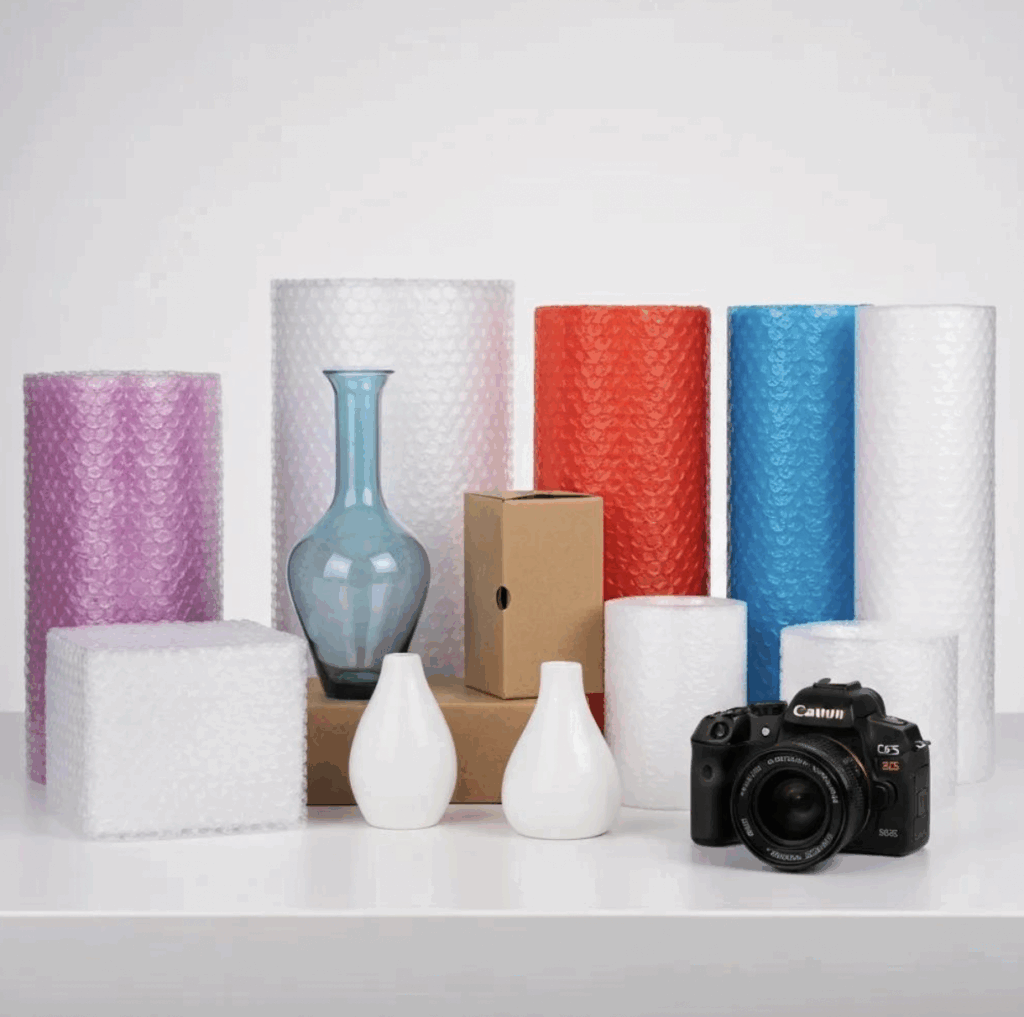
Pick materials based on an item’s shape, fragility, and sensitivity to static or pressure. The right supplies both cushion and keep things from shifting, preventing shock, scratches, and concentrated pressure on weak points. Flat, rigid pieces like plates and framed glass need sturdy boxes and dense wrapping, while curved or thin glass benefits from cushioning that conforms. Below are the go-to materials and why each matters for dishes, glassware, and electronics. After this list we’ll match supplies to specific tasks so you can pack with confidence.
- Bubble wrap (small-bubble): Lightweight cushioning that absorbs shocks and hugs curved glass.
- Packing paper: A scratch-free first layer for plates, bowls, and delicate ceramics.
- Dish pack boxes with dividers: Rigid boxes that separate items and resist crushing.
- Anti-static bags: Essential for circuit boards, hard drives, and other sensitive electronics.
- Foam inserts and moving blankets: Form-fitting protection for TVs, monitors, and oddly shaped pieces.
These options show when to use conforming cushions versus structural containment. Next we break them down side-by-side to help you decide before you pack.
| Material | Protective Attribute | Best Use Case |
|---|
| Bubble wrap (small-bubble) | Cushioning + shock absorption | Wine glasses, stemware, curved glass |
| Packing paper | Scratch prevention + light cushioning | Plates, bowls, porcelain, china |
| Dish pack boxes with dividers | Structural protection + compartmentalization | Stemware sets and multiple plates |
| Anti-static bags | Electrostatic discharge prevention | Motherboards, hard drives, delicate electronics |
| Foam inserts / custom foam | Impact isolation + form-fitting support | TVs, monitors, audio equipment |
Combining structural containment (dish pack boxes) with conforming cushions (bubble wrap, foam) is usually the safest approach. The next section explains which materials work best specifically for dishes and glassware.
Which Packing Materials Protect Dishes and Glassware Best?
Protect plates, bowls, and glass by starting with a scratch-free layer, then adding cushioning, and finally placing items in a sturdy box that resists crushing. Use clean packing paper first to avoid surface abrasions, add bubble wrap for impact absorption, and pack into double-walled dish pack boxes or boxes with dividers. For oddly shaped pieces, foam pouches or molded inserts give tailored support and stop lateral movement. Reinforce seams and corners with packing tape, and don’t overpack boxes — keep each box at a safe, liftable weight. Choosing materials that spread force and limit point pressure prevents the most common breakage during moves.
What Specialized Materials Are Needed for Electronics?
Electronics need two types of protection: mechanical cushioning and electrostatic control. Use anti-static bags for circuit boards and other sensitive parts, and foam or bubble wrap for impact protection. For flat screens, add a rigid screen protector or cardboard corner braces, then wrap the unit in moving blankets before placing it in a TV-specific box or custom foam cradle. Remove batteries, secure loose parts, and bundle cables with labeled ties so connectors don’t get tugged in transit. Grounding and anti-static precautions matter most for computers and high-end audio/video gear because ESD can harm components without visible signs.
Antistatic Packaging for Electronics: Carbon-Based Materials and Dissipative Properties
Antistatic packaging is commonly used to prevent electrostatic discharge (ESD) damage during storage and transport. Manufacturers add antistatic agents to insulating polymer matrices so the packaging can dissipate charge. Carbon-based fillers — such as carbon black, graphite, glassy carbon, carbon nanotubes, and graphene — are effective in creating polymer composites with dissipative properties. This review highlights recent advances in using those carbon-based materials to make antistatic packaging and summarizes fabrication methods being explored in the field.
Carbon-based materials as antistatic agents for the production of antistatic packaging: a review, EGR dos Anjos, 2021
How Do You Pack Dishes Safely for Moving?
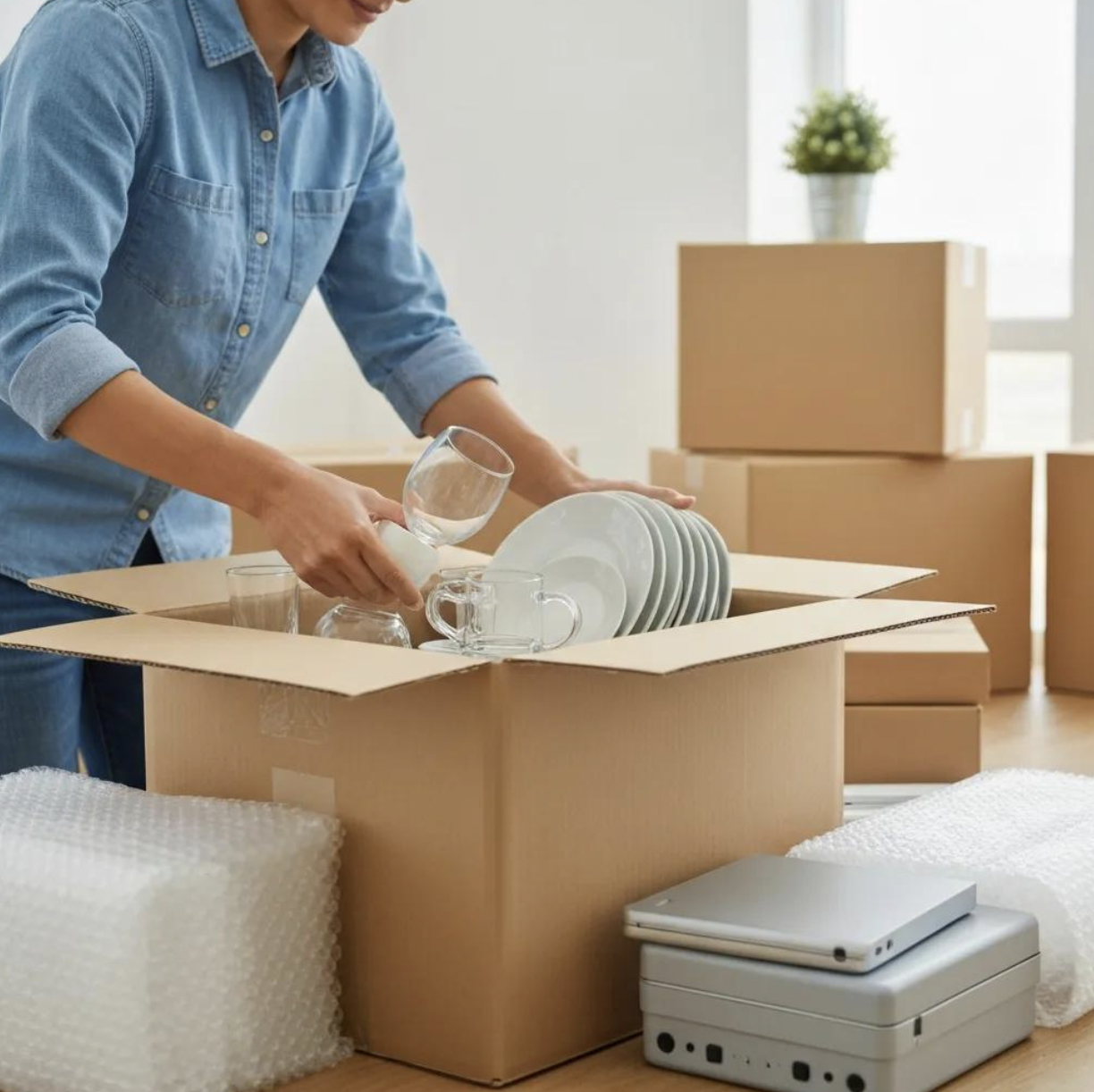
Packing dishes safely combines careful wrapping with smart box loading to avoid crushing and pressure points. Start by decluttering: donate or discard chipped or rarely used items to cut your box count and risk. Use dish pack boxes and double-wrap valuable pieces, placing heavier, sturdier items on the bottom and lighter, delicate pieces near the top. The numbered steps below give a repeatable routine to protect plates and bowls with cushioning, vertical orientation, and secure sealing so they travel without shifting. To learn more about the process, visit ourmoving services.
- Sort and prepare: Remove soft liners and extras, group plates by size and type, and set aside heirlooms for extra protection.
- Wrap individually: Lay a sheet of packing paper on each plate, fold it around the plate, then add a layer of bubble wrap for impact resistance.
- Pack vertically: Stand plates on their edge in the dish pack box with dividers and add padding between each plate.
- Fill voids and seal: Tuck crumpled paper or packing peanuts into empty spaces, then tape and label the box as fragile and indicate which side is up.
Vertical packing reduces compressive stress compared with flat stacking, which is why we recommend standing plates on edge. The next section drills into thewrapping techniquethat makes vertical packing work.
What Is the Best Way to Wrap Plates and Bowls?
Start with packing paper to protect surfaces, follow with bubble wrap for shock absorption, and finish by placing items in a dish pack box for structural support. Wrap each plate in at least one clean sheet of packing paper, secure the paper with a small piece of tape, then add one or two layers of bubble wrap — pay extra attention to edges. Bowls can be nested with paper between each piece, but avoid nesting too many because stacked weight and impact risk increase. Finally, label boxes that contain heirlooms and note which side must stay up so movers handle them correctly.
How Should You Pack Fragile Kitchen Items in Boxes?
When loading boxes, start with a cushioning base layer, then put heavier protected items on the bottom and lighter items above; eliminate empty space so nothing can shift. Place plates vertically in the center, arrange bowls around them if needed, and pack glasses or delicate ceramics in compartments or fully wrapped in bubble wrap. Use double-walled dish pack boxes for extra rigidity and keep box weights reasonable — a practical rule is to limit each box to what one strong person can lift. Seal seams, reinforce corners, and mark each box with the room destination and handling instructions to make unloading smoother.
Safe Packaging Practices: Preventing Overburdening of Fragile Items
Guidance emphasizes avoiding heavy items on top of fragile goods to prevent crushing and damage.
A comprehensive solution strategy for right-sized packaging, 2023
How Can You Pack Glassware and Stemware Without Damage?
Glassware and stemware are most at risk of stem breakage and bowl cracking from side impacts, so separation and stem support are essential. Individual wrapping plus compartmentalization prevents collisions and isolates shock. Use stem guards or tightly wrapped paper around stems, add crumpled paper inside bowls to absorb inward pressure, and use dividers to keep glasses from touching. Proper labeling and careful truck placement further reduce pressure and stacking that can crush fragile boxes in transit.
Here’s a short checklist of expert tips you can apply right away for wine glasses and stemware:
- Stem guards and sleeve protection: Use foam stem protectors or tightly wrapped paper around stems to prevent snapping.
- Cup cavity fill: Put a bit of crumpled paper inside each bowl to reduce inward pressure.
- Individual compartments: Use dividers or molded inserts in dish pack boxes so each glass has its own space.
These simple steps protect stems and stop lateral collisions. The following subsection covers choices for collectors and display sets that need extra care.
What Are Expert Tips for Packing Wine Glasses and Stemware?
For collectible stemware, use dividers in dish pack boxes and pack glasses upright when possible — standing them reduces stem stress from top-loading. If you must lay them down, wrap each glass individually and separate them with sturdy dividers. Use foam sleeves on stems and a thin layer of packing paper over bowls, place each glass in its compartment, and add cushioning at the base and lid. For priceless sets, consider a two-box approach: one for transport and one for short-term storage, both labeled and handled as top-load only. These choices keep stems intact and protect delicate finishes.
How Do You Label and Handle Boxes with Glassware?
Clear labeling reduces improper stacking and rough handling. Mark boxes with large “FRAGILE” and “THIS SIDE UP” labels and add the room destination for efficient placement. Color-code or number fragile boxes and keep an inventory that lists contents and estimated value so movers know which boxes need priority care. When loading the truck, top-load fragile boxes away from heavy furniture and don’t stack heavy items on them. A short handling checklist for movers helps ensure glassware stays where it will see the least movement and pressure.
What Are the Best Practices for Packing Electronics Securely?
Electronics require anti-static protection, snug cushioning, and tidy accessory management to prevent electrical and mechanical damage. Use anti-static bags for sensitive parts, remove batteries, and place small pieces and cables in labeled bags so nothing rattles loose. For large electronics, protect screens with rigid layers and padding and use original packaging when available — manufacturers design that packaging to absorb shocks in the right places. Good cable management and labeling also speeds setup and prevents connector strain that can cause hidden damage. The table below summarizes best practices by device type to make decisions easier.
| Device Type | Attribute Protected | Best Practice |
|---|
| TV / Monitor | Screen integrity + frame | Use original box or a custom TV box with foam inserts and a screen protector |
| Desktop computer | Component and case shock | Remove drives, use anti-static bags, and pack the tower in a foam-lined box |
| Laptop / Tablet | Port and screen protection | Place in an anti-static sleeve and cushion in a padded laptop box |
| Small electronics | Cable and accessory organization | Put cords and accessories in labeled bags taped to the device |
Original packaging or custom foam inserts are the safest choice for large electronics. The next section gives TV-specific packing steps you can follow.
How Do You Pack a TV Safely for Moving?
Start by protecting the screen with a rigid sheet or cardboard protector, then wrap the TV in moving blankets and secure them so they won’t slide. Use the original box if you have it, or get a custom TV box with foam inserts sized to the model. Transport the TV upright to avoid pressure on the screen, pad corners, and anchor it in the truck to stop tipping or sliding. For very large or high-value screens, hire pros or use a two-person lift during loading. These steps reduce frame stress and the most common causes of transit damage.
What Are the Steps to Pack Computers and Small Electronics?
For computers and small devices, remove external drives and batteries, back up important data, and put circuit boards or drives in anti-static bags to prevent ESD damage. Wrap each device in bubble wrap or foam and place it in a box with snug padding so it can’t move. Coil, label, and seal cables in bags taped to the device so everything stays together. For monitors, protect the screen with a soft layer and stand them upright in a padded box. These precautions protect hardware and reduce the risk to stored data from shock or static events.
Antistatic Packaging for Electronics: Carbon-Based Agents for Electrostatic Discharge Protection
Antistatic packaging helps prevent electrostatic discharge (ESD) damage during handling and transport. ESD can arise from friction while items are moved and stored. To make insulating polymers dissipative, manufacturers add antistatic agents. Carbon-based fillers — including carbon black, graphite, glassy carbon, carbon nanotubes, and graphene — have been used successfully to create polymer composites with useful electrical properties. Recent research highlights progress in using these materials to produce antistatic packaging solutions.
Carbon-based materials as antistatic agents for the production of antistatic packaging: a review, EGR dos Anjos, 2021
Deciding When to Hire Professional Fragile Packing ServicesWhen Should You Hire Professional Fragile Packing Services in Jacksonville?
Consider professional fragile packing when items are high-value, irreplaceable, hard to disassemble, or when your schedule makes DIY risky. Professionals bring specialty materials, trained methods, and claims handling that lower overall move risk. They’re especially helpful for antiques, large TVs, artwork, and collections where replacement costs are high. The quick decision table below helps you decide when to call in experts and when to handle items yourself.
| Item Type | DIY Risk Level | Recommended Action |
|---|
| Everyday plates | Low | DIY with standard supplies |
| High-value antiques | High | Hire professional specialty packing |
| Large TVs (over 55") | High | Professional packing or two-person team |
| Complex electronics | Medium-High | Consider partial professional packing |
This tool helps you weigh replacement risk against packing cost and time. For many Jacksonville households, professional packing is worth the extra care when sentimental or costly items are involved. Skinner Moving & Storage offers full, partial, and specialty packing for delicate or valuable pieces — contact us for a free quote tailored to your needs.
What Are the Benefits of Hiring Expert Packers for Fragile Items?
Pro packers reduce damage through trained handling, specialty materials, and packing methods designed to isolate shock and prevent abrasion. That means fewer replacements and less stress on moving day. Professionals also inventory, label, and load with placement strategies that minimize handling errors and protect fragile boxes. Working with a localJacksonville teamshortens coordination time and taps regional experience with common routes and truck layouts. When time or expertise is limited, hiring experts reliably protects high-value items better than DIY alone.
How Can You Request a Free Quote for Professional Packing Services?
To get a free quote, prepare an inventory of fragile items, note your available move dates, and identify rooms or specific high-value objects that need specialty care. With that list ready, contact the mover’s packing services and say whether you want full packing, partial packing, or only specialty packing for antiques or large electronics. Skinner Moving & Storage, a Jacksonville family-owned mover, completes thousands of moves and provides free packing estimates that outline materials, service level, and timelines so you can compare cost versus DIY effort. Having a prepared list speeds the quote and helps you decide if professional packing fits your budget and risk tolerance.
What General Tips Help Protect All Fragile Items During a Move?
Cross-cutting best practices — labeling, balanced weight distribution, void fill, and clear handling instructions — apply to dishes, glassware, and electronics. Label boxes and maintain an inventory so movers know what’s fragile and where it goes, keep box weights balanced to avoid crushing, and fill every gap to stop shifting. Use color-coding or numbered lists to match boxes to rooms and track high-value items. The short list below highlights practical tips and common mistakes to avoid.
- Use double-walled boxes for heavy fragile items and single-walled boxes only for light loads.
- Keep fragile boxes on top of stacks and away from heavy appliances during loading.
- Reserve a marked “essentials” box for items you’ll need right away and carry it yourself.
- Reinforce bottoms and seams with heavy-duty packing tape to prevent sudden failures.
These simple guidelines help standardize fragile handling across all your boxes. The next section covers labeling and organization tactics that make mover coordination more reliable and reduce mishandling.
How Should You Label and Organize Fragile Boxes?
Label boxes by room and contents, and use large, legible markings with both color codes and written instructions like “FRAGILE — TOP LOAD ONLY” to make handling expectations clear. Keep a master inventory with box numbers and contents so fragile items are easy to find and verify on delivery. Add directional arrows to show orientation and place fragile boxes near the truck door for careful loading and unloading. Brief movers on special-handling instructions before they begin — consistent labeling speeds unpacking and prevents accidental stacking that can damage fragile goods.
What Are Common Mistakes to Avoid When Packing Fragile Items?
Don’t overpack boxes until they’re too heavy to lift — that increases the chance of dropping and crushing fragile contents. Spread items across more boxes and prioritize secure padding. Avoid relying solely on household linens for long moves; towels and clothing compress and won’t protect against sharp shocks. Never place heavy furniture or appliances on top of fragile boxes, and fill gaps so items can’t shift in transit. Recognizing these common mistakes and correcting them prevents most DIY packing failures and helps fragile items arrive safely. Read more aboutchoosing the right move.
Frequently Asked Questions
What are the best practices for packing fragile collectibles?
Packing collectibles needs extra care. Clean each piece, wrap it in acid-free paper when appropriate, and use padded or custom-fit boxes that match the item’s shape. Label boxes clearly and keep an inventory. For especially valuable pieces, hire professional packers who specialize in antiques and collectibles to ensure careful handling.
How can I protect fragile items during loading and unloading?
Load fragile boxes last so they go on top, and unload them first. Use moving blankets or bubble wrap during transport, label boxes clearly, and tell movers which boxes need gentle handling. When unloading, place fragile boxes in a designated area and unpack them carefully to avoid accidental bumps.
What should I consider when choosing a moving company for fragile items?
Look for movers with experience handling delicate goods, positive reviews about fragile-item care, and clear insurance options. Ask about their packing materials and techniques, and whether they offer specialty packing. A reputable company will explain their process and give you confidence they can protect your valuables.
How do I pack fragile items for international shipping?
International shipping calls for extra protection and paperwork. Use double-walled boxes, quality cushioning like bubble wrap or foam, and label boxes “FRAGILE.” Include a detailed inventory for customs and consider working with a carrier experienced in fragile international shipments to reduce handling risks and ensure compliance.
What are the signs that a moving company is not suitable for fragile items?
Red flags include limited experience with fragile items, bad reviews for damaged goods, weak insurance options, or a refusal to explain packing methods. If a company can’t provide a clear inventory process or technical packing details, look elsewhere — trust and transparency matter with fragile possessions.
How can I ensure my fragile items are unpacked safely at the new location?
Prioritize unpacking fragile boxes first. Keep labels visible and communicate contents to anyone helping. Unpack in a clear, well-lit area and remove packing materials carefully. Inspect each item as you go and take your time — rushing raises the risk of accidental damage.
What additional precautions should I take for packing heirloom items?
Heirlooms deserve extra protection. Use acid-free wrapping when appropriate, consider custom-fit boxes, and avoid stacking anything on top. If possible, transport heirlooms in your vehicle instead of the moving truck. Photograph items before the move for insurance records and to document condition.
Conclusion
Thoughtful packing protects what matters most and makes moving less stressful. Use the right materials, follow the techniques here, and decide whether professional packing makes sense for your most valuable or sentimental items. If you’d prefer expert help, local pros can tailor a plan to keep your belongings safe — take the next step to protect your treasures on moving day.