Move day is the day your belongings travel from one home to the next. A clear timeline and a focused checklist take the guesswork out of the process and help you stay in control. This guide walks through what to expect on move day in Jacksonville: how to prepare over the 8‑to‑1 week window, a practical morning‑to‑evening timeline, what to pack in a first‑night essentials box, how to communicate withprofessional movers, how to secure valuables and documents, and the post‑move steps including storage options. We’ll also cover local logistics—parking, elevator reservations, pet routines, and utility timing—so you can avoid common surprises. Read on for clear checklists, sample scripts, and local tips to keep your move day smooth and predictable.
How Should You Prepare for Move Day in Jacksonville?
Preparing for move day means breaking tasks into manageable time blocks so the day itself runs smoothly. Spreading work across eight, four, two, and one‑week windows reduces last‑minute stress and speeds up unpacking. The big wins are fewer surprises on move day—especially with things like parking and utility transfers—and more predictable timing. Start by mapping your tasks and locking in service bookings early; the checklist below shows what to prioritize so your move day plan is practical and usable.
Key preparation phases for Jacksonville moves include research, booking, and on‑the‑ground logistics:
- Eight weeks out: Declutter, inventory large items, and compare moving options with virtual estimates.
- Four to six weeks out: Book your movers, arrange professional packing if wanted, and reserve any building elevators or parking permits.
- Two weeks out: Finish labeling, confirm change‑of‑address and utility transfers with local providers.
- One week out: Pack essentials, assemble your first‑night box, and confirm the mover’s arrival window.
Following these phases lets you build a printable, prioritized checklist that removes day‑of decisions and gets you ready for the detailedmoving serviceschecklist that follows.
What Are the Key Steps in the Jacksonville Moving Preparation Guide?
This preparation guide turns general “get ready” tasks into scheduled actions with clear outcomes. By aligning your bookings (movers and packers), logistics (parking, elevators), and household readiness (decluttering, pack‑ahead boxes), you reduce delays and on‑site confusion. Use the checklist below to convert vague tasks into practical steps that make move day predictable.
- Inventory and declutter: Note large and fragile items and remove anything you won’t move to save time and cost.
- Get estimates and book services: Use virtual estimates to compare local andlong‑distance options, then reserve your date.
- Prepare logistics: Reserve elevators, secure parking, and schedule final utility disconnects and new service start dates.
Completing these items gives you a solid foundation for a tailored moving day checklist—what to pack, how to label, and what to do the day before
How Do You Create an Effective Jacksonville Moving Day Checklist?
An effective moving day checklist groups tasks, highlights time‑sensitive items, and uses consistent labeling so the crew works efficiently and your household stays clear on priorities. Categories like essentials, fragile, furniture, and paperwork match mover workflows and cut handling errors—faster loading and clearer placement at your new home. Start with a printable checklist organized by room and item type, and keep an inventory sheet to track counts and condition.
- Create labeled zones: “Load first,” “Load last,” and “Fragile” to guide the crew.
- Use color‑coded labels for rooms and write short contents on each box.
- Keep a master inventory with photos for high‑value or fragile items.
With a checklist in hand, day‑of questions drop dramatically and your walkthrough with the moving crew goes faster—exactly what the detailed timeline below is built to support.
What Is the Detailed Moving Day Timeline for Jacksonville Moves?
A clear moving day timeline ties tasks to time windows so you and the crew share expectations. Assign responsibilities and realistic durations to each phase—arrival, walkthrough, loading, transit, unloading, final walkthrough—and you’ll reduce idle time and surprises. Below is a step‑by‑step timeline tailored forJacksonville moves, with practical time ranges and tips on who does what.
- Movers arrive and crew introductions (30–60 minutes): Confirm access, parking, and inventory.
- Loading and protection (1–3 hours): Movers pad, wrap, disassemble as needed, and load in priority order.
- Transit and arrival (variable): Travel time depends on distance—confirm ETA with your coordinator.
- Unloading and placement (1–3 hours): Crew places furniture per labels and homeowner direction.
- Final walkthrough and paperwork (30–60 minutes): Inspect items, sign receipts, and settle payment if required.
The morning and afternoon sequences that follow break those windows into actionable steps and show the benefits of a dedicated coordinator and aprofessional crewto keep things moving smoothly.
Before the morning walkthrough, use the table below to compare typical arrival tasks and how long each usually takes—so you know what to expect at each stage of the day.
This table summarizes mover actions and typical durations during move day phases.
| Phase | Typical Actions | Estimated Duration |
|---|
| Movers Arrival | Crew introductions, confirm access and inventory | 30–60 minutes |
| Loading Prep | Protective wrapping, disassembly of furniture | 30–90 minutes |
| Active Loading | Carrying items, loading truck in planned sequence | 60–180 minutes |
| Transit | Drive time between origin and destination | Variable |
| Unloading & Placement | Move items into rooms, assemble large pieces | 60–180 minutes |
What Should Happen on Move Day Morning in Jacksonville?
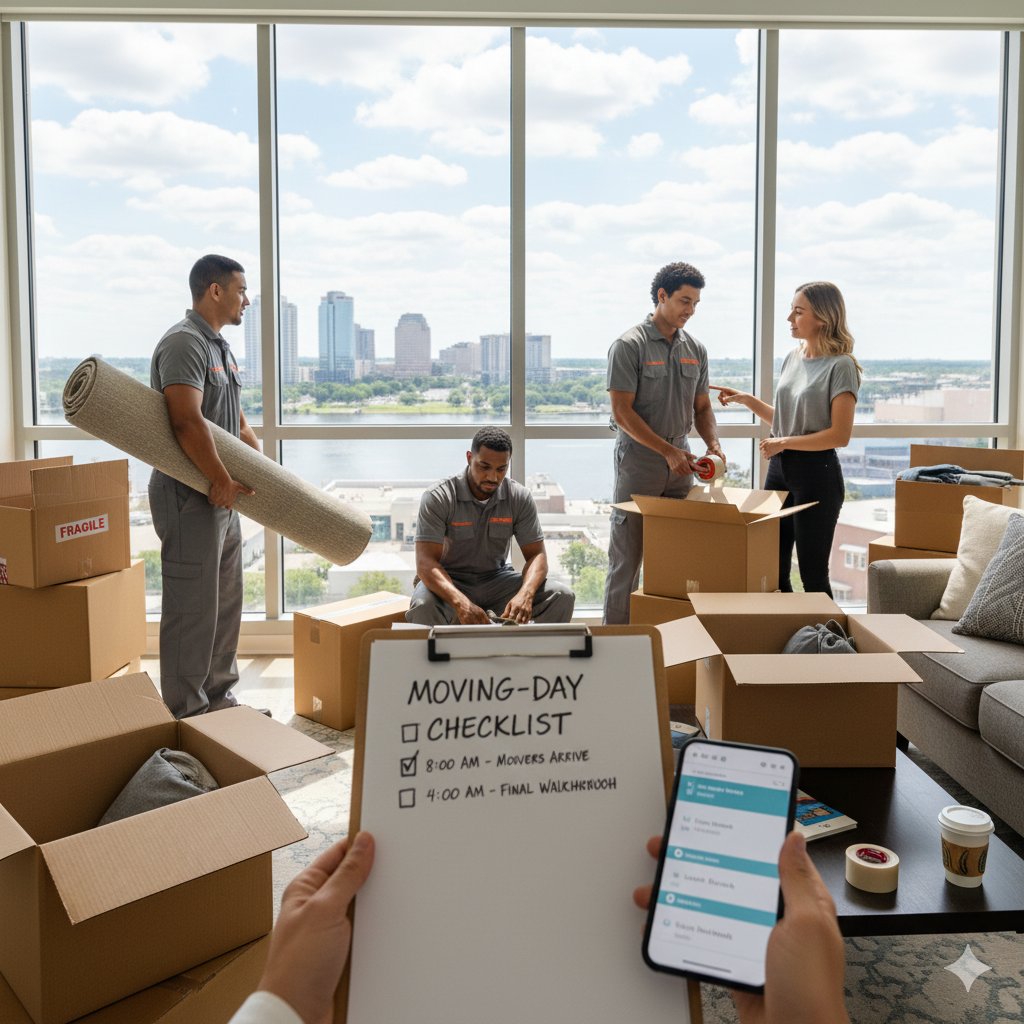
Move day begins when the crew arrives and you do the initial walkthrough. This time sets expectations: confirm access, verify the inventory, and review special handling for fragile or priority items to avoid mistakes during loading. If you hiredprofessional packing services, the crew will fold those labeled boxes into the loading plan. A move coordinator — if assigned — will confirm timing and any parking or route updates.
- Confirm arrival window and point out parking/elevator access for the crew.
- Do a room‑by‑room walkthrough and initial inventory sign‑off.
- Point out special handling for fragile or heavy pieces and take photos for documentation.
These morning checks keep loading efficient and set you up for a smoother transit and afternoon unloading.
What Are the Critical Tasks for Move Day Afternoon and Evening?
Afternoon and evening focus on transport, unloading, placement, and the final admin tasks that wrap up the day. Prioritize rooms and high‑use items—beds, kitchen basics, toiletries—so you can live comfortably the first night while movers finish placement and assembly. The goal is a calm first evening and clear documentation of item condition while the crew is still on site.
- Communicate ETA and any parking or route updates to the receiving crew.
- Prioritize bedroom and kitchen setup for first‑night usability, then place furniture per your plan.
- Inspect items carefully, photograph any damage, and collect paperwork and receipts.
Finish with a final walkthrough, sign any remaining paperwork, and handle tips or payment as appropriate—then move on to unpacking and any storage decisions.
What Essential Items Should Be Included in Your Jacksonville Moving Day Essentials Box?
Your moving day essentials box is a small, clearly marked kit with the things you’ll need right away. Separating these items from the main load lets you function the first night without digging through dozens of boxes. Pack must‑haves—documents, medications, chargers, bedding—in an easy‑to‑reach container and keep it with you.
Essentials every household should include:
- Important documents and wallet items stored together in a travel folder.
- Medications and a basic first‑aid kit for immediate needs.
- Phone chargers, a power strip, and a small toolkit for quick assembly.
The table below shows first‑night box variations so you can customize contents for your household and ensure nothing critical gets left behind.
| Household Type | Must‑Haves | Example Items |
|---|
| Family | Comfort and child essentials | Diapers, favorite toy, extra bedding, snacks |
| Pets | Pet care and comfort | Food, leash, carrier, familiar bedding |
| Singles/Couples | Minimal functional items | Bedding, towels, basic cookware, chargers |
Which Items Are Must-Haves for a Stress-Free First Night in Your New Jacksonville Home?
First‑night must‑haves restore basic routines—sleep, hygiene, and communication—so you can rest and tackle unpacking the next day. Pack absolute necessities last so they’re easiest to access. The result: less stress and a smoother first evening.
Core items: ID, medications, phone chargers, a change of clothes, bedding, and toiletries. Add a simple meal kit with non‑perishable snacks, disposable plates, and utensils so you aren’t hunting for kitchen supplies after a long day. Keep this box in your car or carry it by hand.
This prioritization simplifies the first night and sets up the next steps for families or pet owners, detailed below.
How Can You Customize Your First Night Box for Families, Pets, and Singles?
Customize your first‑night box to match household needs so children and pets have comfort items and adults have what they need to function. Adding a few targeted items reduces anxiety and speeds settling in.
- Families: Include overnight clothes, a small toy, a nightlight, and child‑friendly snacks.
- Pets: Pack familiar bedding, favorite toys, food, bowls, and local vet contact info.
- Singles/Couples: Keep a compact toolkit, an electric kettle or single burner, and minimal cookware for quick meals.
If you’d rather leave this to pros, many moving companies offer packing add‑ons that include labeled first‑night kits—ask about that when you book so you can focus on logistics.
How Do You Coordinate Effectively with Professional Movers on Move Day in Jacksonville?
Good coordination with movers starts before move day: clear communication, defined on‑site roles, and agreed documentation procedures let the crew work quickly while you keep oversight. When responsibilities are clear, the move stays on schedule and problems get resolved faster. The result: time saved, less risk of damage, and fewer surprises.
Best practices: confirm arrival details, name one point of contact, and do a precise walkthrough before loading. If your move includes a dedicated move coordinator, that person becomes the single logistics contact to synchronize timing and solve issues. The table below compares coordination options so you can pick the right level of support.
| Coordination Option | Role | Benefit |
|---|
| Dedicated Move Coordinator | Single contact for logistics and timing | Faster issue resolution and clearer scheduling |
| Virtual Estimate | Pre‑move visual assessment of belongings | More accurate quotes and fewer surprises on site |
| Professional Packing Services | Full packing and labeling by trained crew | Less damage risk and quicker load times |
What Should You Communicate to Your Movers Before and During Move Day?
Tell movers exact access directions, any building rules, which items are fragile, and where you want pieces placed so they can plan routes and timing. Movers move fastest when instructions are clear—without them, crews pause to ask questions, which adds time and cost. Clear directions protect your belongings and keep the schedule tight.
Give your movers your full address and best parking options, point out narrow hallways or stairs, and label fragile items both verbally and on the boxes. Share contact numbers for on‑site supervisors and confirm payment and tipping arrangements ahead of time. A short script you can use: “Parking space is X, elevator reserved 9–11 a.m., fragile items in the living room labeled ‘FRAGILE,’ and place large pieces in bedrooms A and B.” For more tips, visittips and info.
Good pre‑move communication cuts downtime and shows the value of having a dedicated move coordinator, explained next.
How Can a Dedicated Move Coordinator Improve Your Jacksonville Moving Experience?
A dedicated move coordinator is your single administrative and logistical contact who confirms arrival windows, manages inventory lists, arranges virtual estimates, and handles paperwork so you can focus on the personal side of moving. Centralizing decisions with one person reduces miscommunications and makes it easier to adapt when plans change. The result is smoother timing and less stress for you.
Coordinators are especially helpful for long‑distance or complexcommercial relocations, where multiple teams and timelines must be synced. If you want minimal involvement on move day, ask your mover about coordinator support to keep everything on track.
What Are the Best Practices for Handling Valuables and Important Documents on Move Day?
Protect valuables and important documents by carrying them yourself or storing them in lockable, padded containers separate from the main shipment. Keeping custody of high‑value items reduces handling risks and simplifies insurance claims if needed. The payoff is better security and quicker access to critical papers when you need them.
Best practices: use lockable, padded boxes for valuables, keep IDs, closing documents, and insurance papers in a carry bag, photograph items before packing, and record serial numbers for electronics to speed any potential claims. These steps limit loss risk and make administrative tasks faster.
How Should You Pack and Transport Valuables Safely During Your Jacksonville Move?
Transport valuables in your personal vehicle or in lockable, padded containers that movers load separately with clear documentation. Physical protection plus recorded chain‑of‑custody reduces theft and damage risk and makes claims easier if something goes wrong. The result is peace of mind.
Use padded cases for electronics, jewelry boxes for small valuables, and custom crates for artwork when needed. Carry passports, jewelry, essential electronics, and irreplaceable items with you. Photograph valuables from multiple angles and store the images and serial numbers in a secure cloud folder for insurance purposes.
What Documents Should You Keep Accessible on Moving Day?
Keep a compact folder with photo ID, your mover contract or estimate, inventory lists, insurance policy information, and closing or lease documents within reach. Quick access to these papers helps resolve questions during the move and speeds final verification. Keep both printed and digital copies—scan documents to a secure cloud folder and carry a printed packet with you.
Having these documents on hand saves time during the final walkthrough and supports any insurance claims if needed.
What Post-Move Steps Should You Follow After Your Jacksonville Move Day?
After move day, focus on prioritized unpacking, confirming utilities, updating your address, and deciding on storage needs. Work by room priority—kitchen, bedrooms, and bathrooms first—so basic routines resume quickly. This staged approach gets your household functional while you tackle less urgent spaces later.
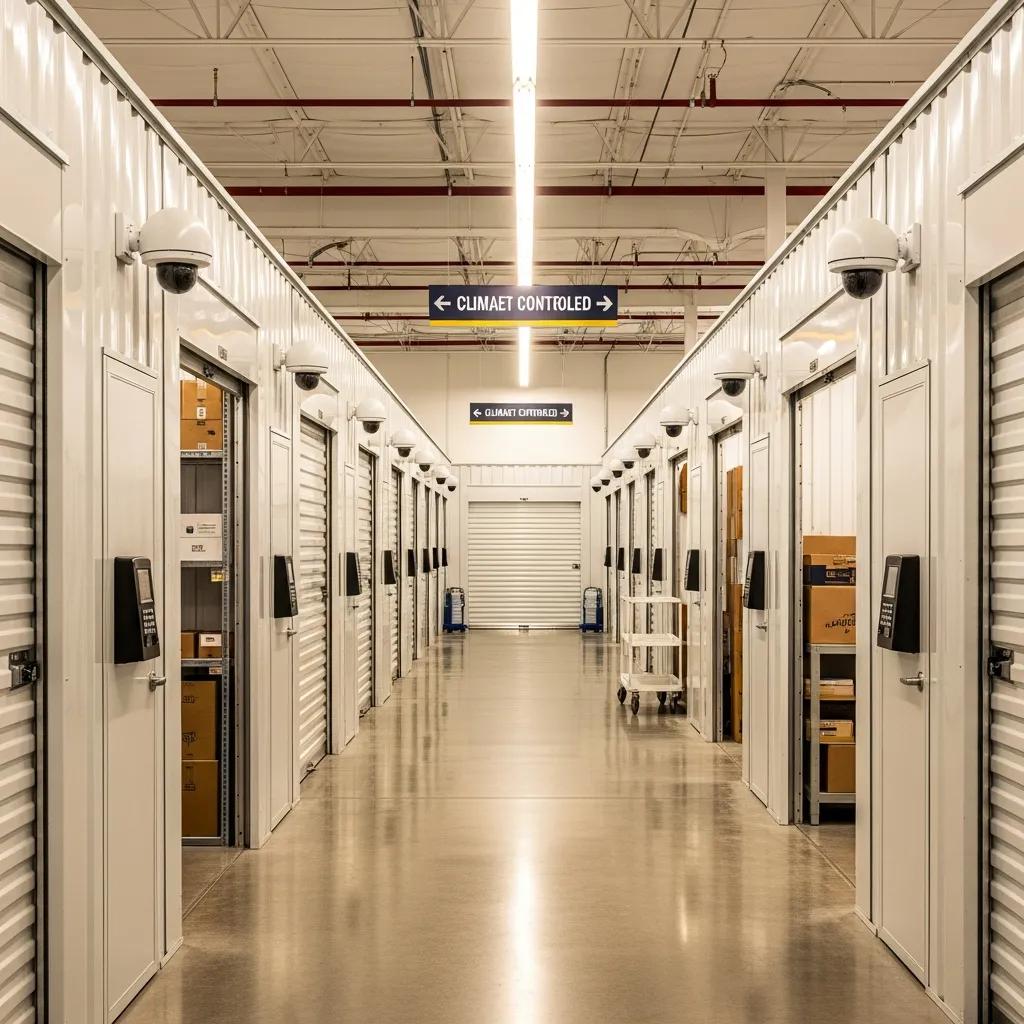
Start by setting up beds and basic kitchen items, schedule appliance installers and service technicians, and update your address with key providers. If you need short‑ or long‑term storage, compare features like climate control and 24‑hour monitoring to protect sensitive items. The table below outlines common storage options and what each is best for; the section that follows covers unpacking strategies.
| Storage Type | Key Feature | Typical Use |
|---|
| Company‑managed storage | Climate control and monitored warehouses | Long‑term preservation of household goods |
| Self‑storage units | Flexible access and various unit sizes | Short‑term overflow or staging during moves |
| Portable container storage | On‑site convenience for loading/unloading | Short‑term staging during renovations or delayed move‑ins |
This comparison helps you choose short‑term or long‑term storage based on duration, item sensitivity, and convenience.
How Do You Unpack and Settle Efficiently in Your New Jacksonville Home?
Unpack with a room‑priority plan to restore function fast, lower decision fatigue, and keep boxes out of key living areas. Start with the rooms you use most—kitchen, bedrooms, and bathrooms—so daily life returns quickly. Then unpack secondary rooms in scheduled blocks over the first week.
- Set up beds and bedding so everyone can sleep comfortably;
- Unpack basic kitchen items so you can make simple meals;
- Create a “do‑not‑unpack” pile for non‑essentials and schedule time blocks over several days to unpack methodically.
This staged approach moves you from chaos to order faster and helps you decide what should be stored, donated, or kept.
What Storage Solutions Are Available for Jacksonville Moves?
Storage options include short‑term self‑storage, company‑managed climate‑controlled storage, and portable containers for on‑site staging. Match the type to your needs—temporary staging versus long‑term preservation—and prioritize features that protect sensitive items and simplify logistics. The right choice gives you flexibility during renovations, delayed move‑ins, or transition periods.
Look for climate control and 24‑hour monitoring for wood furniture, electronics, or delicate fabrics. Company‑managed storage often offers pickup and delivery coordinated with your mover, reducing handling and simplifying scheduling. Skinner Moving & Storage maintains a 10,000 sq. ft. climate‑controlled, 24‑hour‑monitored warehouse and offers virtual estimates and packing services to coordinate move‑and‑store solutions efficiently;requesting a free quotemakes arranging pickup, secure storage, and return delivery simple.
Selection Criteria for Moving Companies: Ensuring a Successful Relocation
When choosing a moving company, use a clear set of criteria—experience, reputation, insurance coverage, and the ability to supply necessary equipment and services—to confirm the company can handle your relocation safely and reliably.
Project Management Schedule Planning for a Short-Distance Factory Relocation: A Case Study, 2023
When selecting a moving company, use established criteria to verify their ability to manage your relocation effectively.
Relocating a Reference Laboratory: Lessons Learned from Pre-Relocation, Relocation, and Post-Relocation Phases
Laboratory relocations highlight three phases—pre‑relocation, relocation, and post‑relocation—each with unique challenges. Thorough planning, careful execution during the move, and structured re‑establishment afterward are essential for success.
A moving experience: lessons learned from relocating a reference laboratory, 2008
Recognizing the pre‑relocation, relocation, and post‑relocation phases helps you plan thoroughly and execute a move with fewer surprises.
Frequently Asked Questions
What should I do if my moving day gets delayed?
If your move is delayed, contact yourmoving companyright away to get a clear timeline and reason. Have a backup plan—temporary storage for belongings or alternate accommodations if needed—and keep your essentials box accessible. Staying flexible and communicating with all parties involved is the fastest way to manage delays.
How can I ensure my pets are comfortable during the move?
For pets, plan a quiet, secure space away from the moving activity or arrange for a friend or sitter on move day. Bring familiar bedding, favorite toys, food, and any medications. After you arrive, create a small, safe area in the new home so your pet can adjust gradually.
What are the best practices for labeling boxes during a move?
Label boxes by room with a color code and write a short contents list on each box. Note special handling like “Fragile” or “This Side Up.” Number boxes and keep a master inventory to track items. Clear labels speed unpacking and make it easy for the crew to place boxes where you want them.
How can I handle unexpected issues on moving day?
Prepare a contingency plan for common problems—delays, last‑minute changes, or weather. Keep important contact numbers handy, stay calm, and communicate clearly with your movers. Document any issues or damages immediately with photos and notes so they can be addressed after the move.
What should I do if I find damage to my belongings after the move?
If you discover damage, photograph it and note the condition. Review your moving contract for coverage and the claims process, then contact your moving company promptly with the documentation. Most reputable movers have insurance and a formal claims procedure—follow it to seek repair or compensation.
How can I make the unpacking process more efficient?
To unpack efficiently, prioritize essential rooms like the kitchen and bedrooms, unpack must‑haves first, and set aside non‑essentials in a “do‑not‑unpack” pile. Use labeled boxes to guide the process and consider short, timed sessions to maintain momentum. Enlist help to speed things up and keep the work organized.
What are the benefits of hiring professional movers versus DIY moving?
Professional movers bring experience, equipment, and training to handle heavy and fragile items safely, lowering the risk of damage. They offer packing services and insurance, which can save time and reduce stress. While DIY moving may seem cheaper, the convenience, efficiency, and protection provided by pros often make it the better choice for many households.
Conclusion
Planning your move day in Jacksonville with a clear timeline and checklist makes the whole process less stressful and more efficient. Prioritize key tasks, secure logistics like parking and utilities, protect valuables, and consider professional services when you want a smoother experience. Start your plan now—and if you’d like help, our team is ready to providepacking servicesto make your move easier.